thyme
Plant Whisper
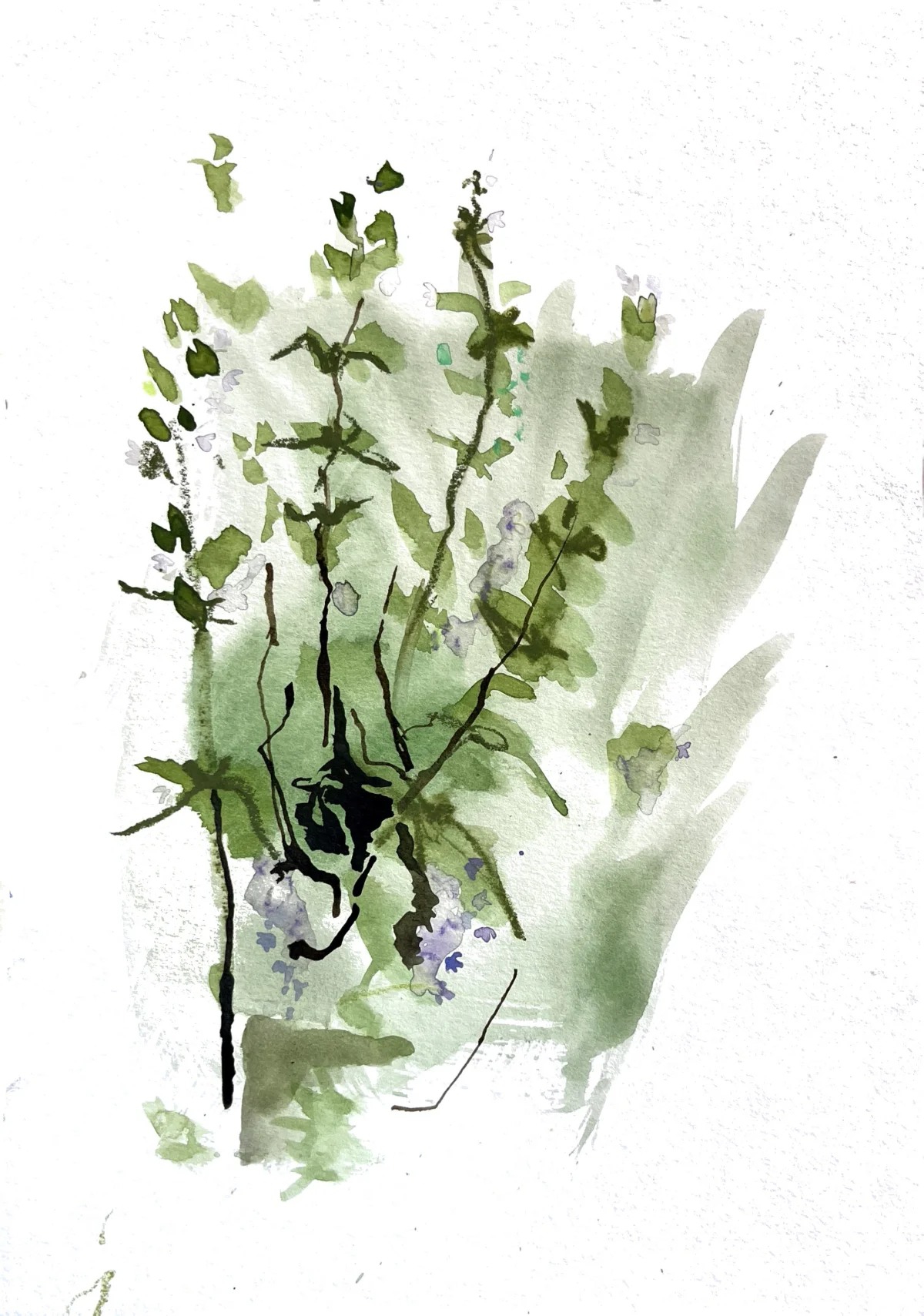
Thyme (Thymus vulgaris) originates from the Mediterranean region, from Spain to Italy, and found its way across the Alps to Central Europe as early as the Middle Ages. Today, it is widespread in many parts of Europe and is frequently cultivated. Its name likely derives from Greek – either from "thymos" (courage, strength) or "thymiama" (incense), which suggests its former use in sacrificial ceremonies.
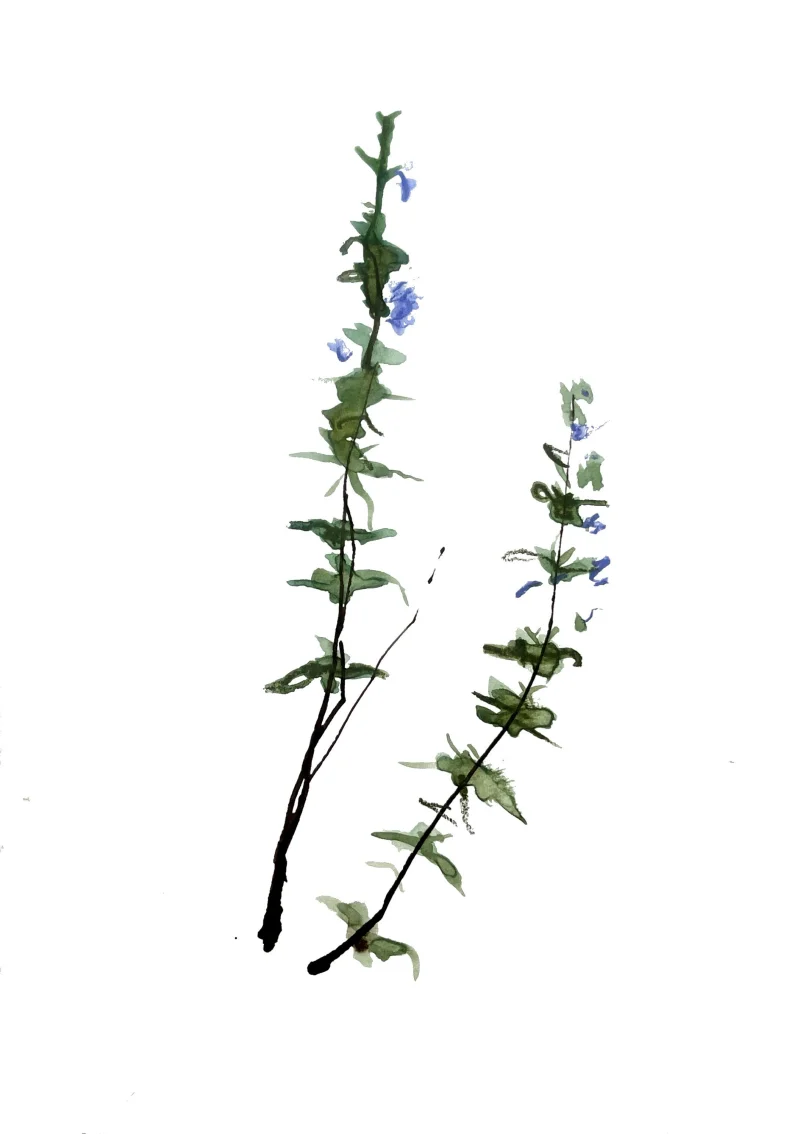
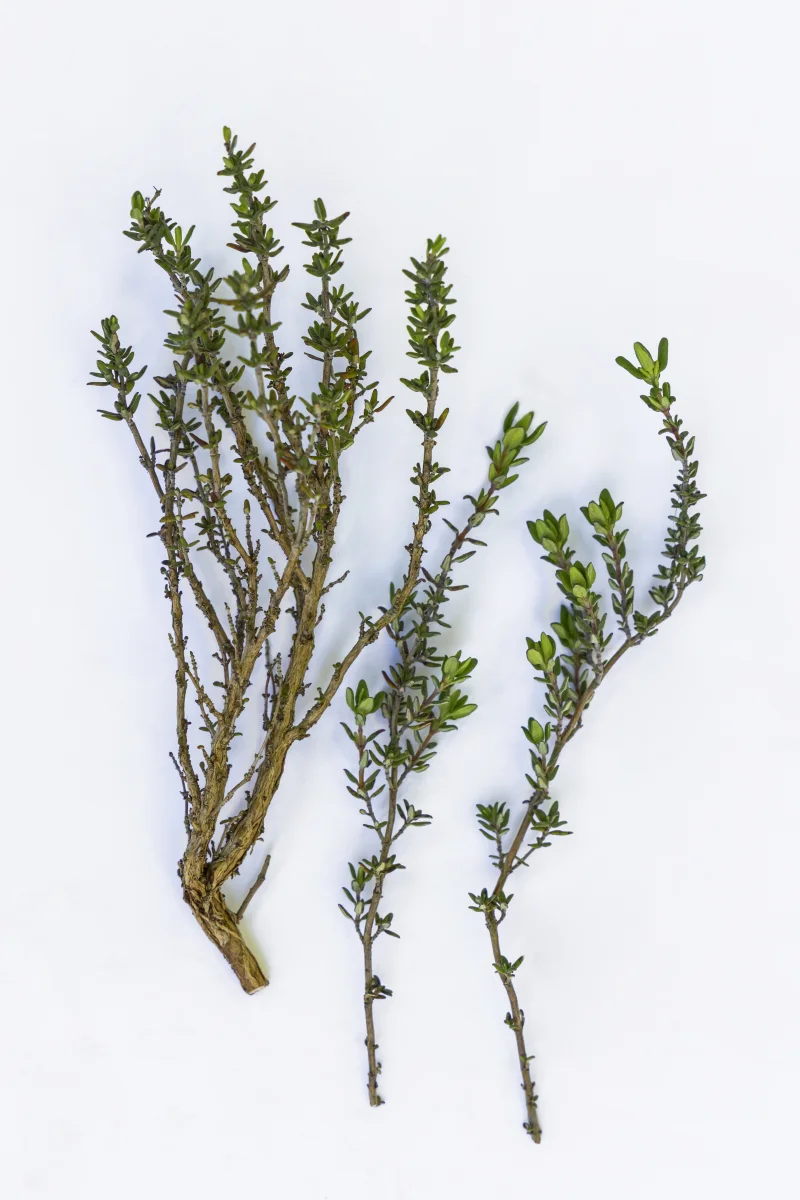
The plant itself is a small, aromatic shrub with fine, slightly needle-like leaves and delicate pinkish-purple flowers that appear from June to September. When crushed, its characteristic spicy fragrance is released – a testament to the essential oils stored in the leaves, which give thyme its special properties.
Thyme is a key ingredient in Herbes de Provence and a commonly used herb in cooking. Among other things, it is often used in hearty meat dishes, fish, vegetarian dishes, potato gratin, soups, egg dishes, on tarte flambée, and with baked sheep's cheese. It can also be used in marinades, vinegar, herb salt, butter, and cheese. There is also the well-known thyme honey, which is somewhat more aromatic and not as sweet as conventional honey. The thymol it contains has antibacterial properties and can therefore provide relief from colds, especially coughs, bronchitis, and catarrh of the upper respiratory tract, when taken as a tea, syrup, drops, or steam bath.
thyme honey is also known as thyme honey, which is somewhat more aromatic and not as sweet as regular honey. thymol has antibacterial properties and can therefore be used as a tea, syrup, drops, or in a steam bath to alleviate symptoms of colds, especially coughs, bronchitis, and catarrh of the upper respiratory tract.
thyme honey is also used in vinegar, vinegar, vinegar, and vinegar. thyme is also used in thyme honey. thyme is also used in thyme honey. thyme is also used in thyme is often used in ...
Botanical Facts
 dry
dry
 Hardy down to -23 °C
 Mediterranean region
 May/June to October
 sunny
sunny
 dry grassland and dry scrub
Healing Properties
Thyme tea has expectorant, antispasmodic, and antibacterial properties, making it an effective home remedy for colds, chesty coughs, bronchitis, and sore throats.
Pour 150 ml of hot water (do not boil!) over 1.5 to 2 g of thyme, let it steep for 10 minutes, and then strain. You can also stir in a spoonful of honey.
In addition, it can aid digestion and help with loss of appetite and gastrointestinal problems. Its anti-inflammatory properties make it a helpful ingredient in facial toners for blemished and oily skin.
Caution: Pregnant women should not consume large quantities of thyme, as it can stimulate the uterus and potentially induce labor. Thyme can be confused with other types of thyme, but these can all be used similarly.
Features
 10 - 40 cm
 ❀ (flowers), 🌿 (herb)
 A bee-friendly herb that provides bees, bumblebees and butterflies with plenty of nectar.
⚕ (medicinal plant), 🍽 (spice)
Studies show that essential oils such as cinnamon, clove, tea tree, rosemary, and thyme (containing thymol and linalool ct.) can be very effective against multi-resistant bacteria. A combination of antibiotic therapy and essential oils is often beneficial.
A bee-friendly herb that provides bees, bumblebees and butterflies with plenty of nectar.
⚕ (medicinal plant), 🍽 (spice)
Studies show that essential oils such as cinnamon, clove, tea tree, rosemary, and thyme (containing thymol and linalool ct.) can be very effective against multi-resistant bacteria. A combination of antibiotic therapy and essential oils is often beneficial.
Endangerment Level
- Not Evaluated
All information about herbs has been carefully compiled but does not claim to be complete. None of the information provided constitutes medical advice.
GOLDEN RULE for EVERYTHING: Eat only what you know! The rule applies: a handful of wild plants per person and day may be collected on public land. Use only washed plant parts that you can identify clearly – when in doubt, please refrain from using them.
TIP: One advantage of buying over-the-counter medicines from a pharmacy or specialist retailer is the expert advice on your symptoms.