Small scabious
Plant Whisper
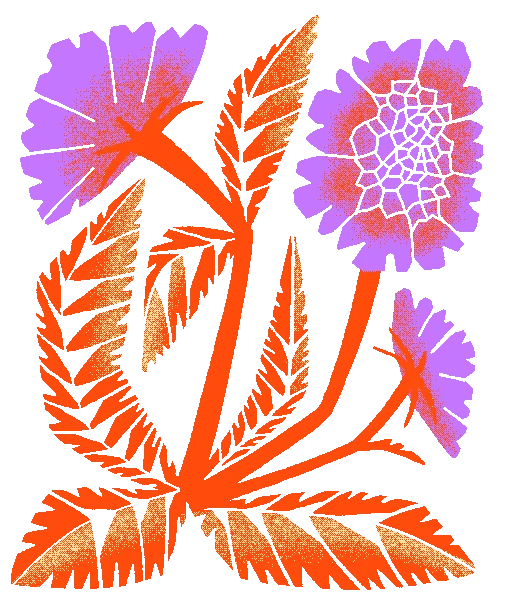
The dove scabious is a deep-rooted plant. Its roots can grow up to one and a half meters long. Several geographical and ecological subspecies are recognized, though they have received little attention. Its dove-blue flowers likely gave it its name – Scabiosa columbaria. Its young leaves are edible and are used as herbs in wild plant salt, as a raw food, as a vegetable, in salads, and as a seasoning in bread dough.
Botanical Facts
 fresh
fresh
 Hardy down to -23°C
 large parts of Europe, the Caucasus, Western Asia, Asia
 July - November
 sunny
sunny
 dry, nutrient-poor meadows
Healing Properties
In the past, pigeon scabious was used as a medicinal plant against skin parasites (scabies) and skin diseases, which gave it the name "crustwort".
Features
 20 - 80 cm
 🌷 (entire plant)
 It is considered an excellent source of nectar for bees: the pollen is collected by seven wild bee species for their brood. One of these wild bees bears the wonderful name of the scabious pollen bee. One can easily imagine it flying heavily, its hind legs laden with pollen from the field scabious.
💐 (Ornamental plant)
It is considered an excellent source of nectar for bees: the pollen is collected by seven wild bee species for their brood. One of these wild bees bears the wonderful name of the scabious pollen bee. One can easily imagine it flying heavily, its hind legs laden with pollen from the field scabious.
💐 (Ornamental plant)
Endangerment Level
V - Near Threatened
All information about herbs has been carefully compiled but does not claim to be complete. None of the information provided constitutes medical advice.
GOLDEN RULE for EVERYTHING: Eat only what you know! The rule applies: a handful of wild plants per person and day may be collected on public land. Use only washed plant parts that you can identify clearly – when in doubt, please refrain from using them.
TIP: One advantage of buying over-the-counter medicines from a pharmacy or specialist retailer is the expert advice on your symptoms.