ribwort plantain
Plant Whisper
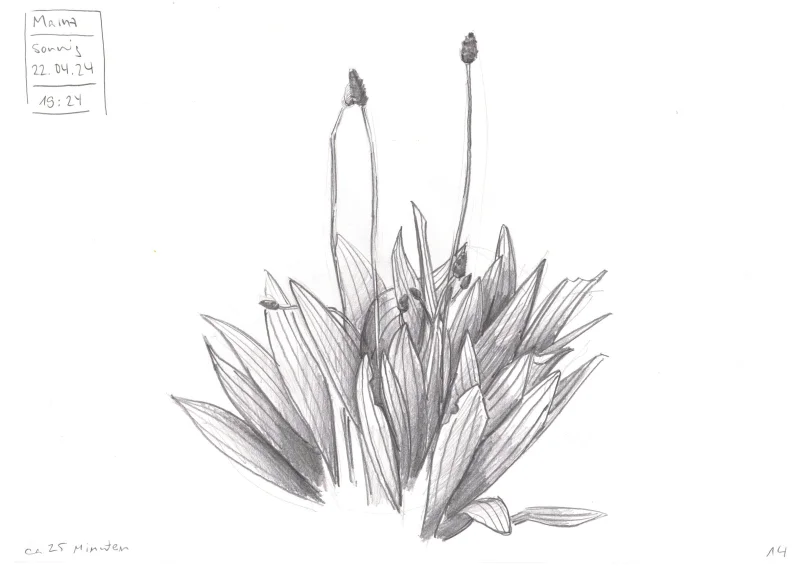
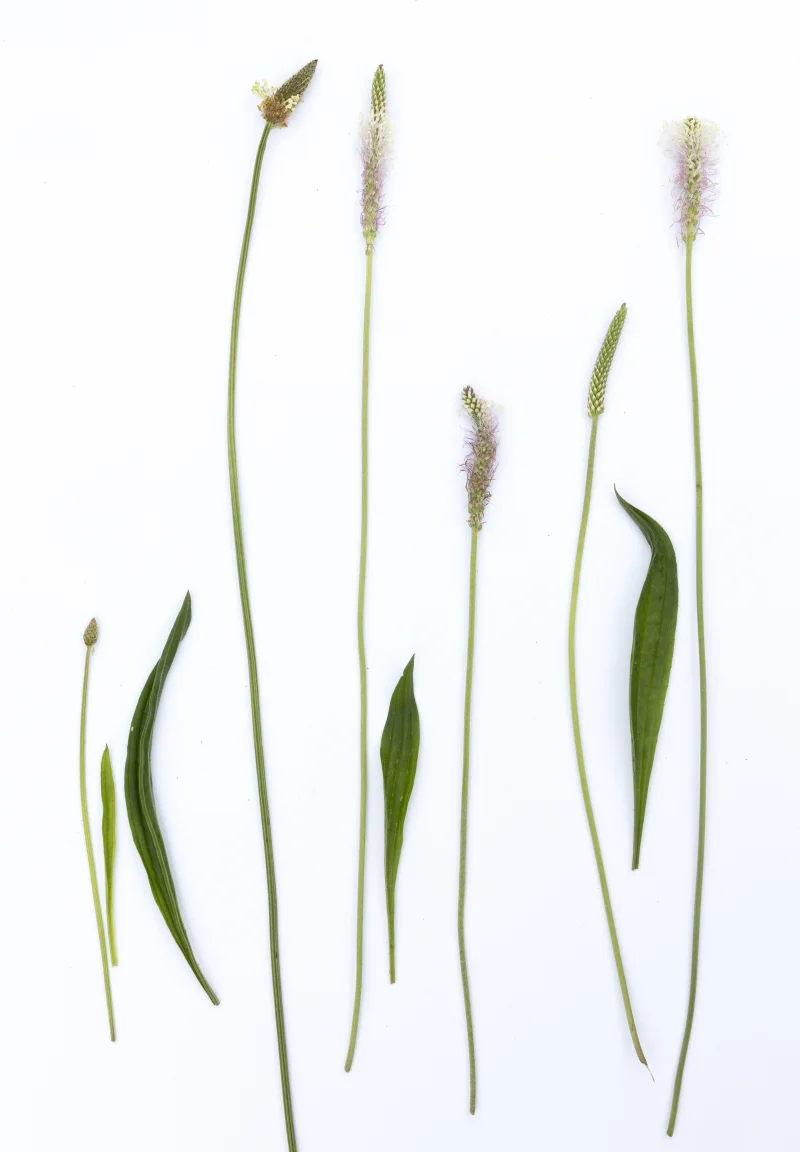
Ribwort plantain (Plantago lanceolata) is primarily known for its expectorant properties, especially in syrup, pressed juice, and tea, which are beneficial for treating upper respiratory tract infections. The juice also stimulates digestion and metabolism. Its wound-healing properties can even be utilized on the go, for injuries or insect bites. In such cases, a leaf can be disinfected by squeezing it until the juice is released and then applying it to the wound.
In the kitchen, the tender leaves can be added to salads, smoothies, or cooked as a spinach substitute. And a real treat: ribwort plantain flower buds taste like mushrooms!
Versatile uses – as a tea, syrup, tincture, fresh juice, or simply as a leaf applied directly from nature. The syrup is particularly popular and is traditionally used to support cough relief.
These more tender leaves can be used in a variety of ways – as a tea, syrup, tincture, fresh juice, or simply as a leaf applied directly from nature. Recipe: Making an Earth Chamber Syrup
Layer a well-cleaned screw-top jar with fresh, dried plantain leaves. Pour over thin honey or sugar so that everything is well covered. Add another layer of leaves and cover again with honey. Repeat this process until the jar is completely full. Let it stand for a few hours or overnight until everything has settled, then top it up with honey. All leaves must be covered with honey or sugar. Seal with several layers of thick parchment paper and tie it securely around the neck of the jar with thin wire. Submerge the jar in a hole in the ground about 50 cm deep, place a small board on top, carefully cover it with soil, and mark the spot. The jar is now surrounded by a consistent earth temperature, which causes slow fermentation. After 3 months, dig up the syrup, press it well, and bottle it.
Then store it in a cool place. For added benefits, you can add cough-suppressing essential oils such as thyme or eucalyptus.
Add 2-5 drops of oil to 100ml of syrup.
Botanical Facts
 Sunny to partially shaded, moderately dry locations
 extremely frost-hardy and winter-hardy
 Europe, Mediterranean region, western Asia, now spread worldwide
 May to September/October
 Loving sun and warmth
 Meadows and roadsides
Healing Properties
Today, ribwort plantain is primarily used for colds. It has anti-inflammatory and astringent properties and is particularly helpful for dry coughs, bronchitis, and other respiratory ailments. It is also used for inflammation of the mouth and throat, as well as for skin problems such as insect bites, wounds, or slow-healing injuries.
Its effects are multifaceted: antibacterial, antispasmodic, decongestant, antipruritic, and healing-promoting. It also supports blood clotting.
Constituents: mucilage, bitter substances, flavonoids, vitamins C, A, and K, iron, silica, and the glycoside aucubin. Antibiotic properties have been demonstrated.
Its effects are multifaceted: antibacterial, antispasmodic, decongestant, antipruritic, and anti-itch.
Features
 30 - 50 cm
 🌷 (entire plant)
Impulse: Wild plants can also support cultivated plants
The research project "BNI 2030" is therefore investigating the use of ribwort plantain to reduce these losses and simultaneously ensure the nitrogen supply for plants. The goal is environmentally friendly and more sustainable crop production.
Because: Around 75% of nitrogen inputs into German waters originate from agriculture, especially from maize cultivation. Soil processes in this process result in nitrogen losses and the release of the climate-damaging nitrous oxide. After the maize harvest, large amounts of nitrate often remain in the soil, which, without countermeasures, is leached into the groundwater.
⚕ (medicinal plant), 🍽 (edible)
🌷 (entire plant)
Impulse: Wild plants can also support cultivated plants
The research project "BNI 2030" is therefore investigating the use of ribwort plantain to reduce these losses and simultaneously ensure the nitrogen supply for plants. The goal is environmentally friendly and more sustainable crop production.
Because: Around 75% of nitrogen inputs into German waters originate from agriculture, especially from maize cultivation. Soil processes in this process result in nitrogen losses and the release of the climate-damaging nitrous oxide. After the maize harvest, large amounts of nitrate often remain in the soil, which, without countermeasures, is leached into the groundwater.
⚕ (medicinal plant), 🍽 (edible)
 Inhibits the conversion of ammonium nitrogen to nitrate, thus keeping fertilizer available for longer.
 It provides food for about 10 species of wild bees and serves as a caterpillar food plant for over 85 butterfly species, including endangered species such as the fritillary.
...
It provides food for about 10 species of wild bees and serves as a caterpillar food plant for over 85 butterfly species, including endangered species such as the fritillary.
It provides food for about 10 species of wild bees and serves as a caterpillar food plant for over 85 butterfly species, including endangered species such as the fritillary.
...
Endangerment Level
* Least Concern
All information about herbs has been carefully compiled but does not claim to be complete. None of the information provided constitutes medical advice.
GOLDEN RULE for EVERYTHING: Eat only what you know! The rule applies: a handful of wild plants per person and day may be collected on public land. Use only washed plant parts that you can identify clearly – when in doubt, please refrain from using them.
TIP: One advantage of buying over-the-counter medicines from a pharmacy or specialist retailer is the expert advice on your symptoms.