Celery
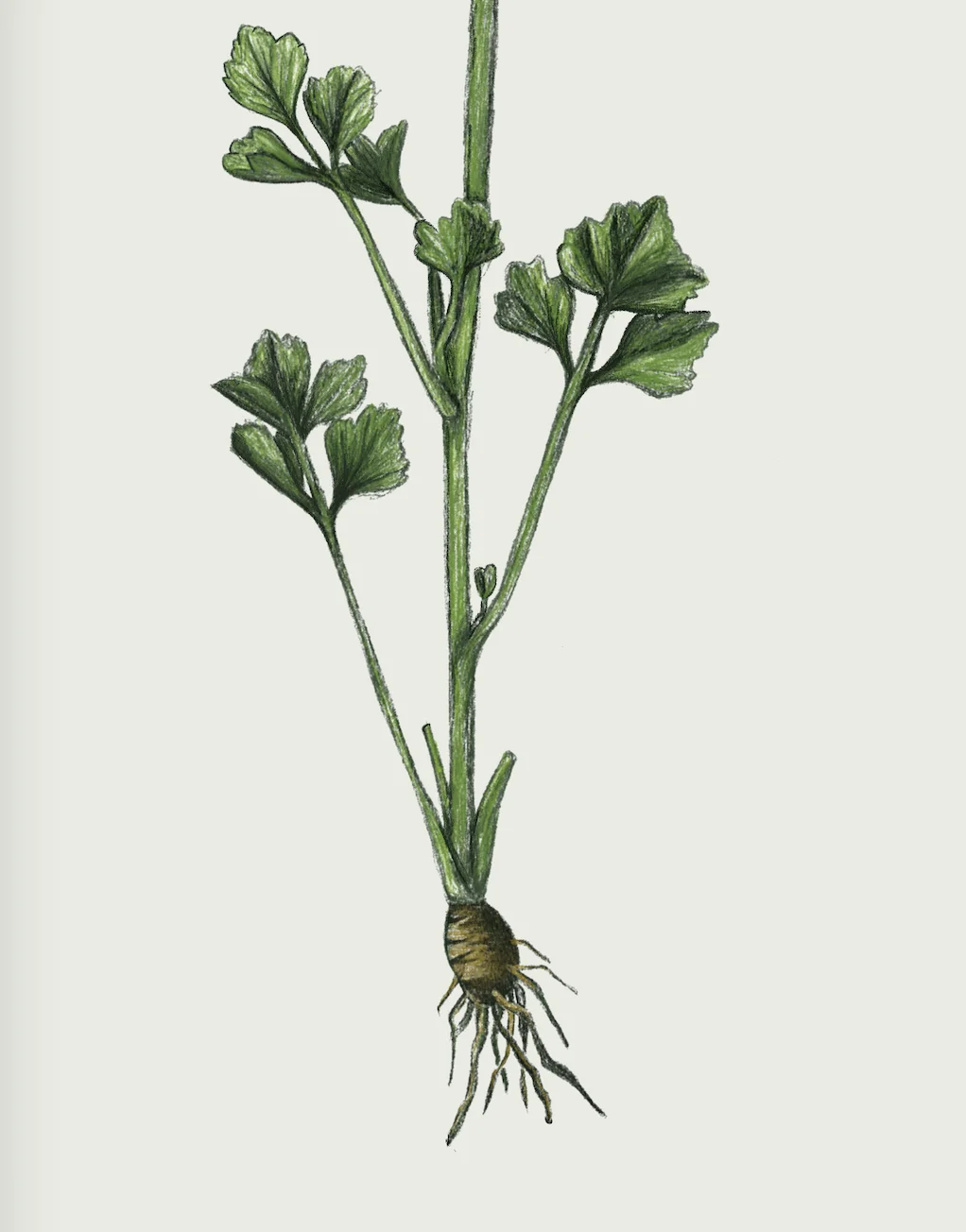
Plant Whisper
Celery grows in transitional habitats, such as salt marshes on the coast. Symbolizing transition, celery was a plant of passage and also of death in antiquity. It was heavily imbued with ritual significance, associated not only with the cult of the dead but also with hero worship. Its complex aroma consists, among other things, of phthalides, terpenes, and aldehydes, which are responsible for its herbaceous, spicy, and slightly bitter fresh taste.
Botanical Facts
 needs moist and nutrient-rich soil
 annual
 Mediterranean region, Western Europe, Black Sea and Caspian Sea.
 June
June
 Sun
Sun
 saline coastal meadows and salt marshes in the inland areas
Healing Properties
Celery was formerly used to treat rheumatism, arthritis, and gout. It is no longer used medicinally. However, as a dietary supplement, celery can lower blood pressure, reduce inflammation, and aid digestion. This is primarily due to its high potassium content and secondary plant compounds such as apigenin. This low-calorie vegetable supports kidney function, acts as a diuretic, and can help regulate cholesterol and blood sugar levels. It is used to support treatment for rheumatism and to strengthen the immune system. HOWEVER, IT CAN TRIGGER ALLERGIES.
Features
 30 - 40 cm
 🌷 (entire plant)
 Since celery is a biennial plant and is usually harvested in the first year, it rarely flowers in the kitchen garden, but when it flowers in the second year, it is very attractive to insects.
🍽 (edible)
Since celery is a biennial plant and is usually harvested in the first year, it rarely flowers in the kitchen garden, but when it flowers in the second year, it is very attractive to insects.
🍽 (edible)
 Freshly pressed celery juice (from cultivated celery) is considered beneficial to health because it is rich in micronutrients and has anti-inflammatory properties. As a juice, the valuable nutrients can be absorbed by the body particularly quickly and easily.
Endangerment Level
–

All information about herbs has been carefully compiled but does not claim to be complete. None of the information provided constitutes medical advice.
GOLDEN RULE for EVERYTHING: Eat only what you know! The rule applies: a handful of wild plants per person and day may be collected on public land. Use only washed plant parts that you can identify clearly – when in doubt, please refrain from using them.
TIP: One advantage of buying over-the-counter medicines from a pharmacy or specialist retailer is the expert advice on your symptoms.