Rosemary
Plant Whisper
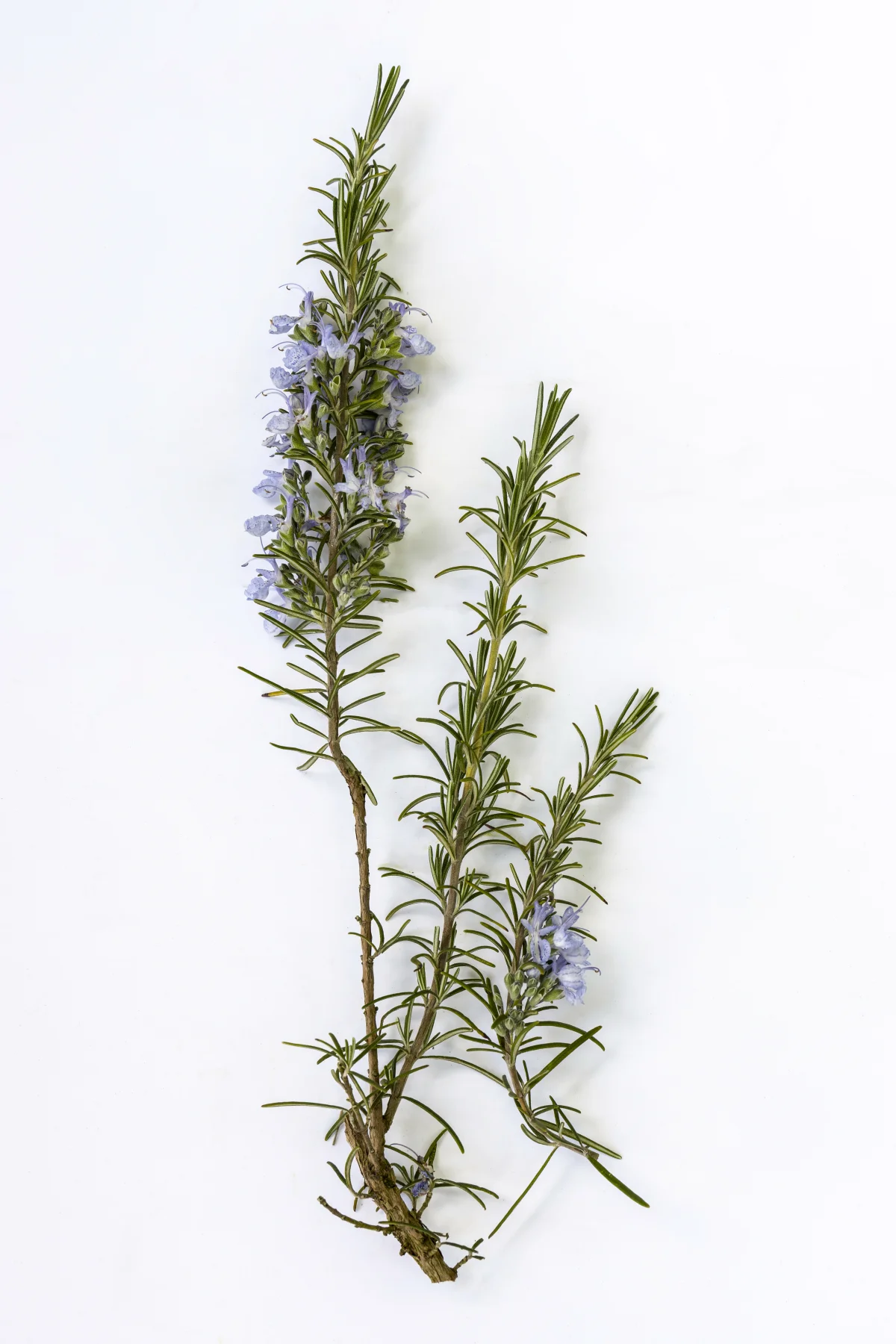
I am rosemary – native to the sunny Mediterranean, where I have always thrived on coasts and in warm landscapes. My name means "dew of the sea" (ros marinus), a poetic image whose origin remains somewhat unclear. The "officinalis" in my name, however, reveals that I am an ancient and valued medicinal and culinary herb with a long tradition.
As an evergreen, fragrant shrub, I can grow up to one meter tall. My narrow, needle-like leaves are firm and covered with fine white hairs on the underside. When crushed, they immediately release my intense, aromatic fragrance – a testament to the essential oils stored within my leaves.
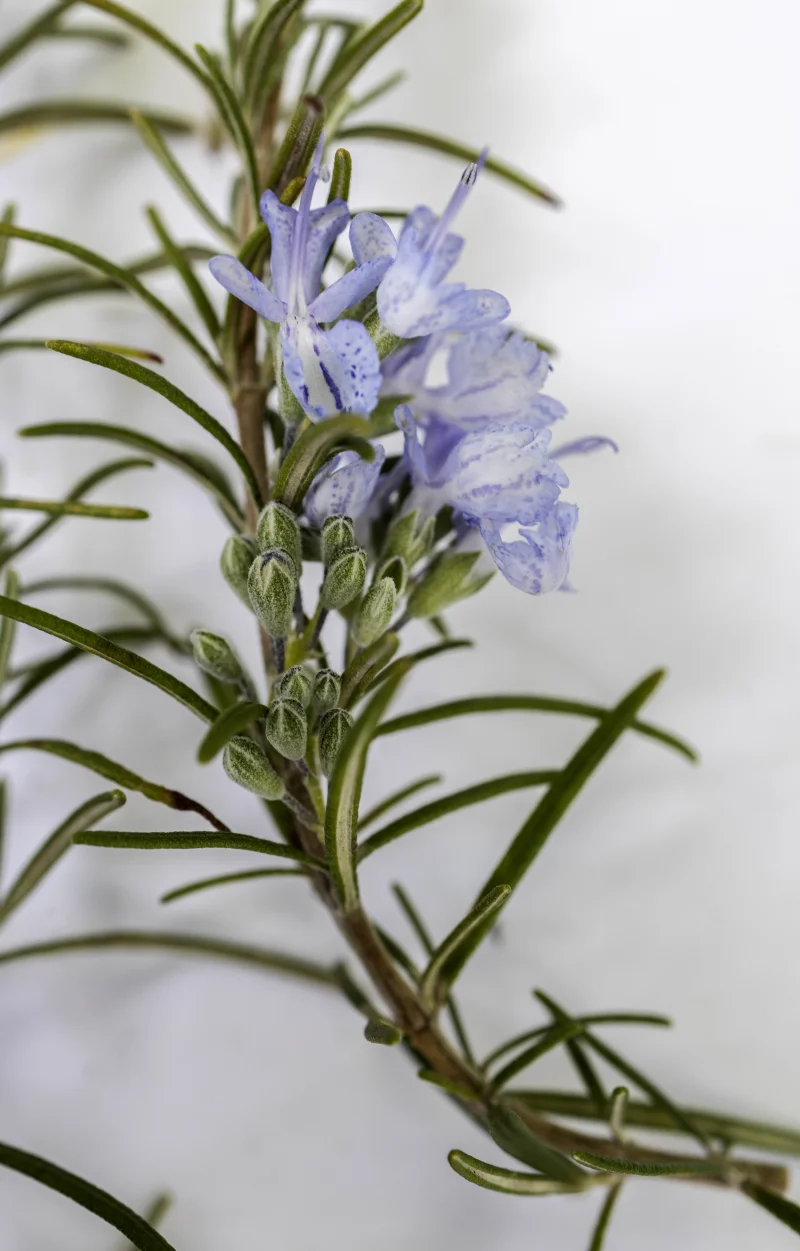
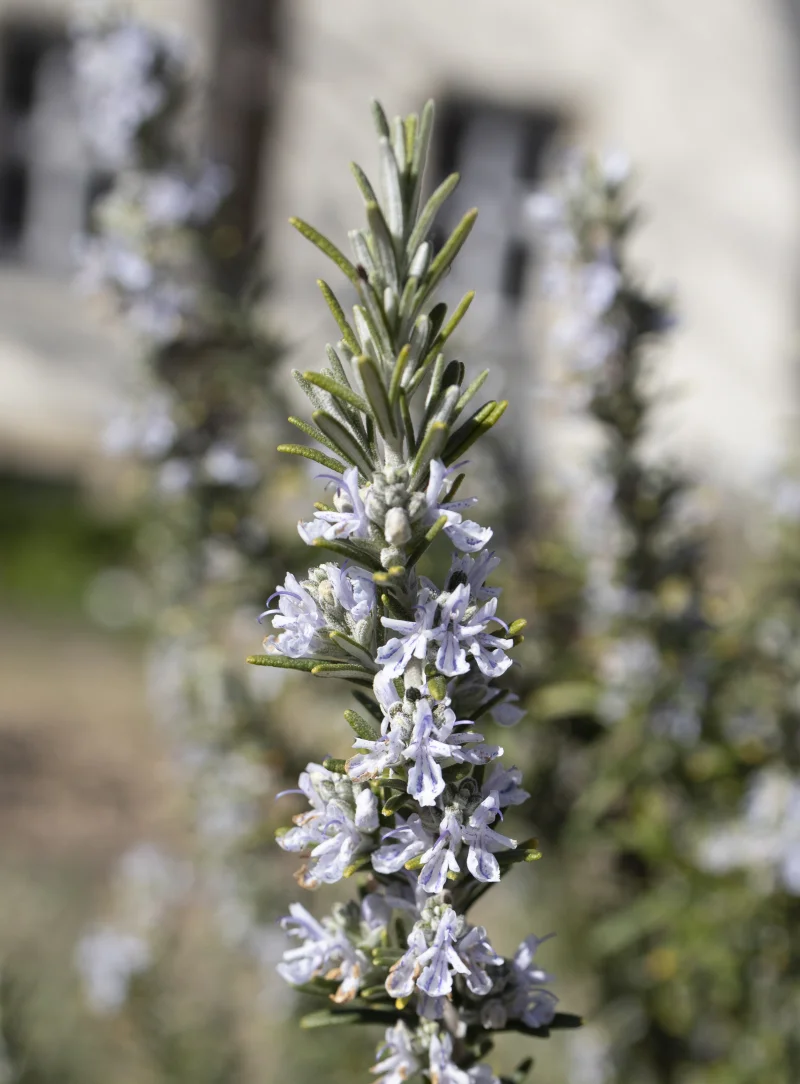
In late spring, from May to June, delicate flowers in pale blue to light purple appear in the leaf axils.
Botanical Facts
 dry soils
 Only partially winter-hardy, but special varieties can withstand temperatures down to -20 or -25 degrees Celsius.
 Western and central Mediterranean region
 March - May
 full sun, warm
 open, mostly stony locations
Healing Properties
Dried rosemary leaves are used, their characteristic aroma being particularly pronounced when crushed. Based on long-standing experience, they are primarily used internally for digestive issues, such as bloating or mild spasmodic gastrointestinal discomfort.
Externally, rosemary is used as a bath additive or rub, usually in the form of rosemary oil. It provides relief from minor muscle and joint pain and can also stimulate circulation. Accordingly, it is frequently used in cardiovascular teas, as well as in ointments, creams, and bath oils. It has generally anti-inflammatory and stimulating properties.
Rosemary is used externally as a bath additive or rub, usually in the form of rosemary oil.
Features
 50 - 200 cm
 ⚕ (medicinal plant), 🍽 (spice), 🔧 (aromatic plant)
 Extremely insect-friendly and a valuable food source for bees, bumblebees, and butterflies. Its early blue flowers, especially those blooming from February/March onwards, provide pollinators with vital energy. As a Mediterranean member of the mint family, it particularly attracts wild bees and is ideal for natural gardens.
The extract is listed as the antioxidant and preservative E 392.
Extremely insect-friendly and a valuable food source for bees, bumblebees, and butterflies. Its early blue flowers, especially those blooming from February/March onwards, provide pollinators with vital energy. As a Mediterranean member of the mint family, it particularly attracts wild bees and is ideal for natural gardens.
The extract is listed as the antioxidant and preservative E 392.
 I'm also firmly rooted in the kitchen: I'm an intense, Mediterranean spice and go wonderfully with potato dishes, roasted vegetables, meats like lamb or beef, and fish. My needles have a strong flavor, so they're usually cooked or fried along with the other ingredients and used sparingly. My woody stems release their aroma into sauces when cooked.
I'm an intense, Mediterranean spice and go wonderfully with potato dishes, roasted vegetables, meats like lamb or beef, and fish.
I'm also firmly rooted in the kitchen: I'm an intense, Mediterranean spice and go wonderfully with potato dishes, roasted vegetables, meats like lamb or beef, and fish. My needles have a strong flavor, so they're usually cooked or fried along with the other ingredients and used sparingly. My woody stems release their aroma into sauces when cooked.
I'm an intense, Mediterranean spice and go wonderfully with potato dishes, roasted vegetables, meats like lamb or beef, and fish.
Endangerment Level
–
All information about herbs has been carefully compiled but does not claim to be complete. None of the information provided constitutes medical advice.
GOLDEN RULE for EVERYTHING: Eat only what you know! The rule applies: a handful of wild plants per person and day may be collected on public land. Use only washed plant parts that you can identify clearly – when in doubt, please refrain from using them.
TIP: One advantage of buying over-the-counter medicines from a pharmacy or specialist retailer is the expert advice on your symptoms.