Wild thyme

Plant Whisper
I am wild thyme (common thyme) and I provide strength for the respiratory system and digestion – an aromatic medicinal herb with a long tradition, already valued by Hildegard von Bingen.
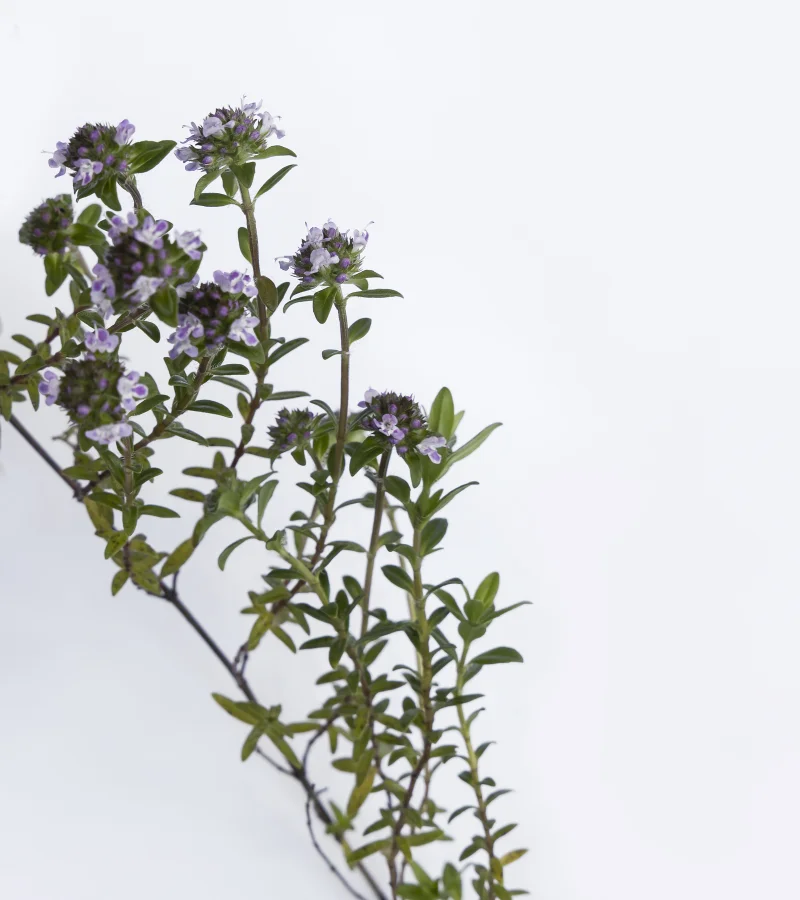
As a member of the mint family, I grow as a small, robust subshrub and exude my unmistakable, spicy fragrance. Originally native to the warm regions of the Mediterranean, I can now be found in many gardens.
Hildegard von Bingen particularly recommended me for those desiring clearer skin – best enjoyed regularly. My small, violet blossoms also enrich the kitchen: they lend dishes a delicate touch and are wonderful for decorating salads.
I contain a powerful essential oil – primarily thymol – which makes me a valuable companion during colds. I have antispasmodic, antibacterial, antiviral, and anti-inflammatory properties. Especially when suffering from coughs, bronchitis, and other respiratory ailments, I help loosen mucus and ease breathing.
But it's not just the respiratory system that benefits: digestion is also stimulated, making even heavy and fatty foods easier to digest. That's why I'm a valued spice in the kitchen – robust in flavor and soothing in effect.
The best time to harvest is at the beginning of flowering, when the essential oil content is at its highest. Even in ancient times, people recognized my qualities – Egyptians, Greeks, and Romans even valued me for ritual purposes.
Versatile in my uses, I can be enjoyed as a tea, syrup, tincture, or even as a comforting honey. Powerful yet balancing, I provide support throughout cold and flu season and beyond – best used consciously and mindfully.
Botanical Facts
 ideal as a drought-tolerant ground cover or for rock gardens
 hardy
hardy
 Europe and Western Asia
 May/June to August/September
 Ideally sunny and warm.
 Dry, sunny and nutrient-poor locations
Healing Properties
The dried, flowering herb of wild thyme (Serpylli herba) is used, which owes its characteristic, spicy fragrance to the essential oils it contains. These oils are located in fine glandular scales on the leaves and are released when the leaves are crushed.
Wild thyme is traditionally used to treat catarrh of the upper respiratory tract. It has antispasmodic and antimicrobial properties. It is also used as a bath additive to support the treatment of acute and chronic respiratory illnesses – based on long-standing experience in folk medicine.
Features
 5 - 25 cm (creeping)
 ❀ (flowers), 🌿 (herb)
⚕ (medicinal plant), 🍽 (spice)
❀ (flowers), 🌿 (herb)
⚕ (medicinal plant), 🍽 (spice)
 It serves as an important source of nectar and pollen for wild bees, bumblebees, and honeybees, and blooms from July to September when many other plants have already finished flowering. It also attracts numerous butterflies and serves as caterpillar food for some species, such as the thyme blue. With its high nectar value, it is considered one of the most insect-friendly plants overall.
 Up to five subspecies are described; some varieties smelled of lemon.
Endangerment Level
* Least Concern

All information about herbs has been carefully compiled but does not claim to be complete. None of the information provided constitutes medical advice.
GOLDEN RULE for EVERYTHING: Eat only what you know! The rule applies: a handful of wild plants per person and day may be collected on public land. Use only washed plant parts that you can identify clearly – when in doubt, please refrain from using them.
TIP: One advantage of buying over-the-counter medicines from a pharmacy or specialist retailer is the expert advice on your symptoms.