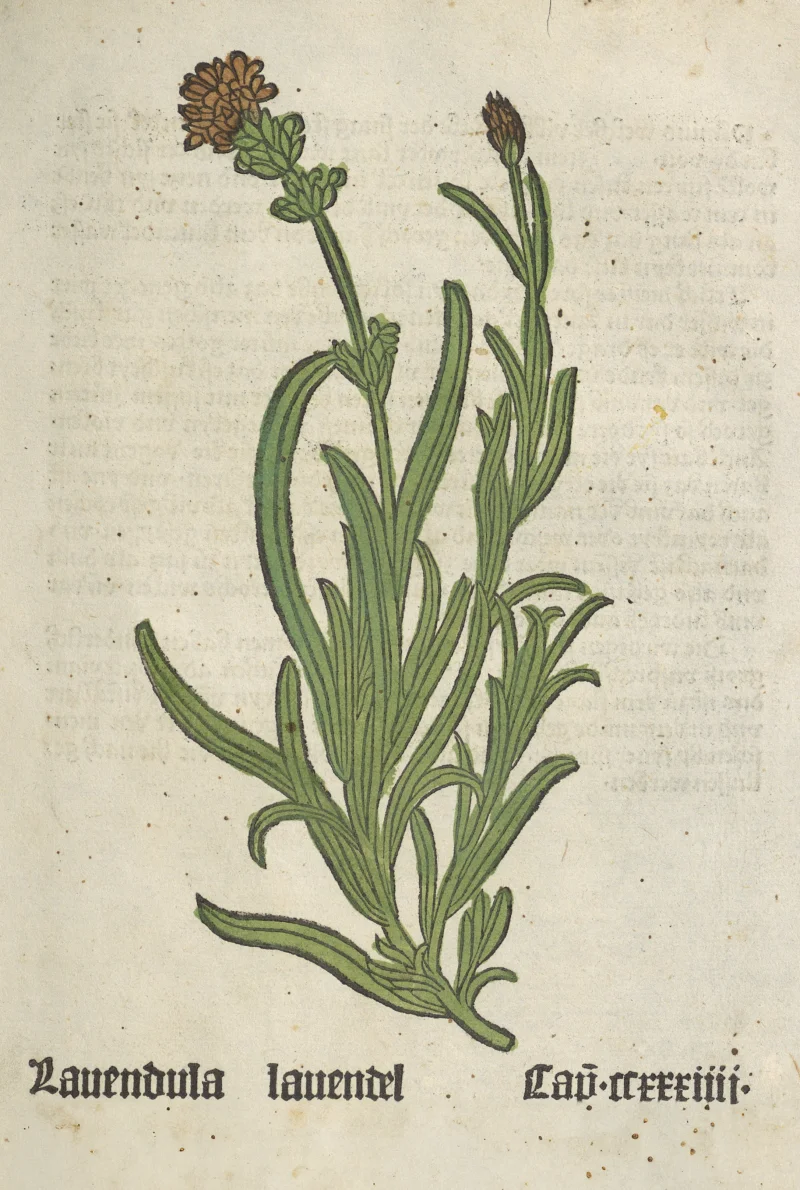
Lavender
Animation: Matalebi Schajan Sound: Matalebi Schajan
Plant Whisper
The scent of lavender is familiar from lavender sachets in the linen closet – the name Lavandula angustifolia comes from the French word "lavare," meaning to wash, cleanse, or clarify. In France, especially in Provence, lavender is also enjoyed in gourmet cuisine, for example, as an ingredient in "Herbes de Provence," in tartlets with goat cheese and ricotta cream and caramelized figs, as lavender salt, lavender butter, or lavender ice cream.
Besides true lavender, hybrids are also used commercially. The warmer the location, the stronger the aroma.
A practical tip: If you like the scent of lavender and suffer from restlessness, instability, and racing thoughts, then use the essential oil (pay attention to quality and use Lavandula angustifolia). Simply put a few drops on your pillow in the evening. Massaging the soles of your feet with diluted lavender oil (2 drops of essential oil to 1 tablespoon of carrier oil) is also beneficial. For the aromatic "Four Thieves Vinegar" with mild anti-infective properties, combine 1 tablespoon each of lavender blossoms, thyme, sage, and rosemary leaves with half a liter of apple cider vinegar in a tightly sealable, wide-mouthed bottle and let it infuse for about 3 weeks. Shake occasionally. Then strain and store in a dark place. This lavender preparation, available from pharmacies or specialty stores, is also suitable for exam anxiety and stage fright.
Botanical Facts
 Dry, warm slopes
 Hardy
Hardy
 Northwestern Mediterranean
 June - August
 Sunny
Sunny
 Dry, lean, calcareous and very well-drained soils; dry, warm slopes
Healing Properties
Traditional Uses: In Traditional European Medicine, lavender was considered purifying and opening; it "strengthens, refreshes, and warms" and was believed to help with "old, cold illnesses of the head and nerves" to clear the mind, promote calm, and alleviate anxiety. For the Romans, it was, alongside roses, the most important personal care product. In medieval Marseille, four robbers are said to have protected themselves against the plague with a vinegar recipe—which presumably also contained lavender.
Modern Medical Perspective: Lavender flowers (Lavandulae flos) primarily contain essential oil and tannins. Its use for restlessness, insomnia, and racing thoughts is now well-documented, as is its use for nervous-related complaints such as irritable stomach, irritable bowel syndrome, and circulatory problems. Research focuses primarily on its use for pain relief and anxiety, but also, for example, externally for psoriasis or wound healing. Since the essential oil responsible for the effect is also absorbed through the skin, both external and internal applications are permitted and beneficial, ranging from taking preparations from pharmacies and specialty stores for restlessness and anxious moods, to using an aroma lamp, applying it topically, or adding it to bathwater.
Since the essential oil responsible for the effect is also absorbed through the skin, both external and internal applications are permitted and beneficial, from taking preparations from pharmacies and specialty stores for restlessness and anxious moods, to using it in an aroma lamp, applying it topically, or adding it to bathwater.
Features
 50 - 80 cm
 ❀ (flowers), 🌿 (herb)
 Threat in Rhineland-Palatinate: Only cultivated and occasionally wild, and therefore not relevant.
🔧 (Cosmetics, insect repellent), 💐 (Ornamental plant), ⚕ (Medicinal plant)
Threat in Rhineland-Palatinate: Only cultivated and occasionally wild, and therefore not relevant.
🔧 (Cosmetics, insect repellent), 💐 (Ornamental plant), ⚕ (Medicinal plant)
Endangerment Level
–

All information about herbs has been carefully compiled but does not claim to be complete. None of the information provided constitutes medical advice.
GOLDEN RULE for EVERYTHING: Eat only what you know! The rule applies: a handful of wild plants per person and day may be collected on public land. Use only washed plant parts that you can identify clearly – when in doubt, please refrain from using them.
TIP: One advantage of buying over-the-counter medicines from a pharmacy or specialist retailer is the expert advice on your symptoms.