Mullein, Flannelleaf, Flannelplant.
Animation: Hannah Philipsen Sound: Pixabay
Plant Whisper
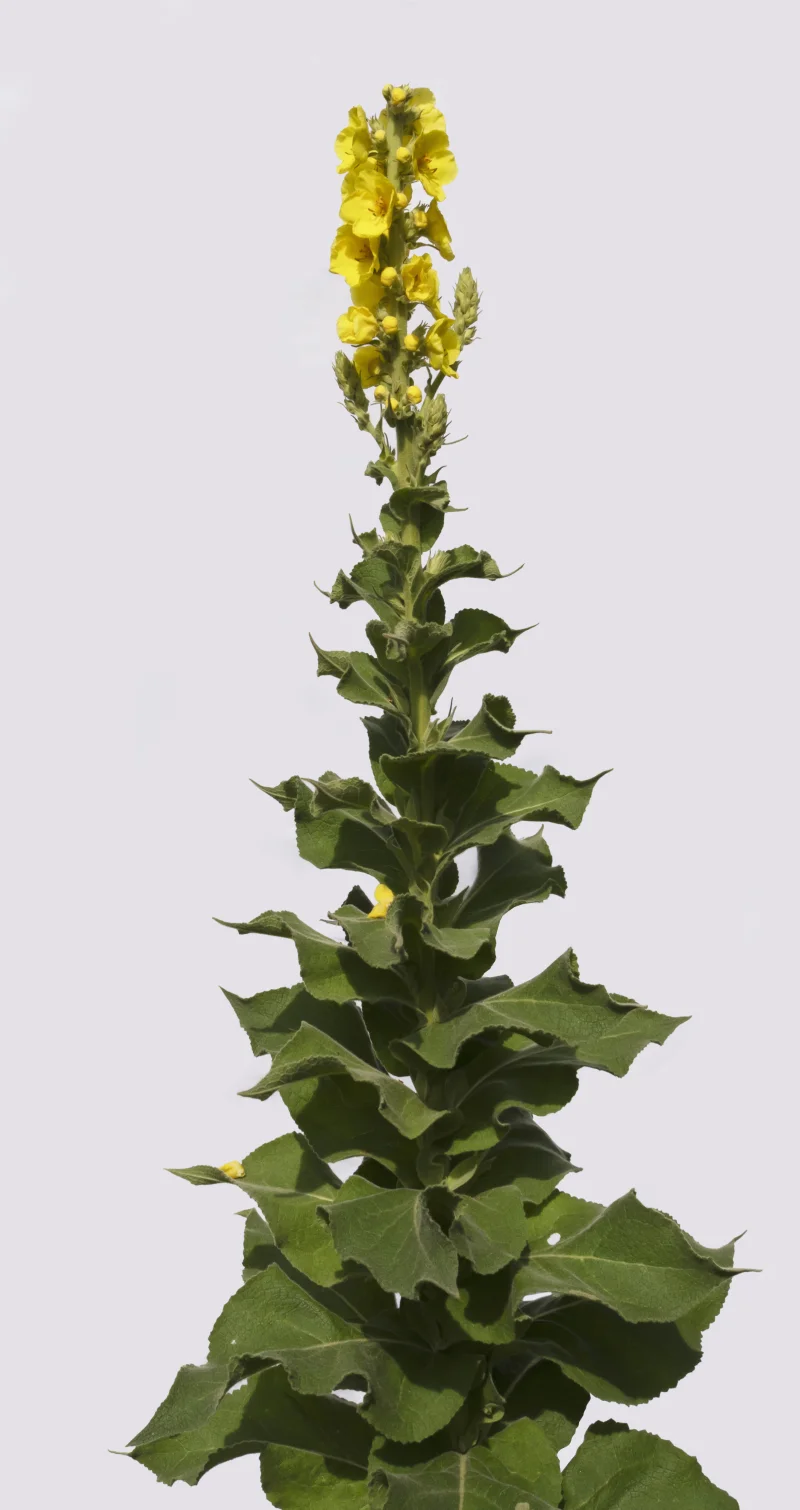
It owes its name to its tall, candle-like flower spike, densely covered with golden-yellow blossoms – its dried stems were even used as torches in the past.
There are several varieties; the Great Mullein can grow up to 2 meters tall and bears particularly large flowers. With its far-reaching, candle-like stem, richly adorned with golden-yellow blossoms, the mullein truly lives up to its name. Its woolly, hairy leaves, which grow in a rosette at the base and along the stem, are typical. The yellow flowers appear in long, dense racemes from July to September.
The mullein is generally a biennial. In its first year, it forms a low-lying rosette of leaves. Only in the second year does the tall flowering stem with its characteristic yellow blossoms develop; after seed formation, the plant dies.
The mullein was and still is also called "Mary's Candle" and is considered a symbol of the Virgin Mary – as an emblem of her blessing scepter. It is also part of the traditional herb bundle, a bouquet of various medicinal herbs, ears of grain, and blossoms, which is tied and blessed on the Feast of the Assumption (August 15). It symbolically represents protection, health, and blessings for home and farm. Typical components, besides the often centrally placed mullein, include St. John's wort, yarrow, wormwood, mugwort, tansy, and chamomile.
mullein is also part of the traditional herb bundle, a bouquet of various medicinal herbs, ears of grain, and blossoms, which is tied and blessed on the Feast of the Assumption (August 15). It symbolically represents protection, health, and blessings for house and farm.
Botanical Facts
 dry to moderately moist
 Predominantly very frost-hardy and winter-hardy perennials, down to -20 / -23 degrees
 Europe, Asia Minor, North Africa and other temperate regions
 June to September
 very high light requirement
 moderately dry, sunny locations with open soil
Healing Properties
The dried flowers are especially popular as an ingredient in cough teas, as they have anti-inflammatory, antibacterial, and antiviral properties. They are also calming and promote sleep. An oil infusion can be used in ointments and creams to aid wound healing in cases of skin inflammation and bruises.
Features
 30 - 200 cm
 ❀ (flowers), 🌿 (herb), 🎑 (seeds)
⚕ (medicinal plant), 🔧 (dye plant)
❀ (flowers), 🌿 (herb), 🎑 (seeds)
⚕ (medicinal plant), 🔧 (dye plant)
 An insect-friendly plant for wild bees, honeybees, and butterflies. Provides abundant pollen, especially in the morning.
 The stems were formerly used as torch bases. The poison *Barbsaco*, from *Verbsacum*, is used to stun and trap fish.
Endangerment Level
* Least Concern
All information about herbs has been carefully compiled but does not claim to be complete. None of the information provided constitutes medical advice.
GOLDEN RULE for EVERYTHING: Eat only what you know! The rule applies: a handful of wild plants per person and day may be collected on public land. Use only washed plant parts that you can identify clearly – when in doubt, please refrain from using them.
TIP: One advantage of buying over-the-counter medicines from a pharmacy or specialist retailer is the expert advice on your symptoms.