Garlic
Plant Whisper
Garlic – A Time-Tested Natural Remedy with a Long Tradition
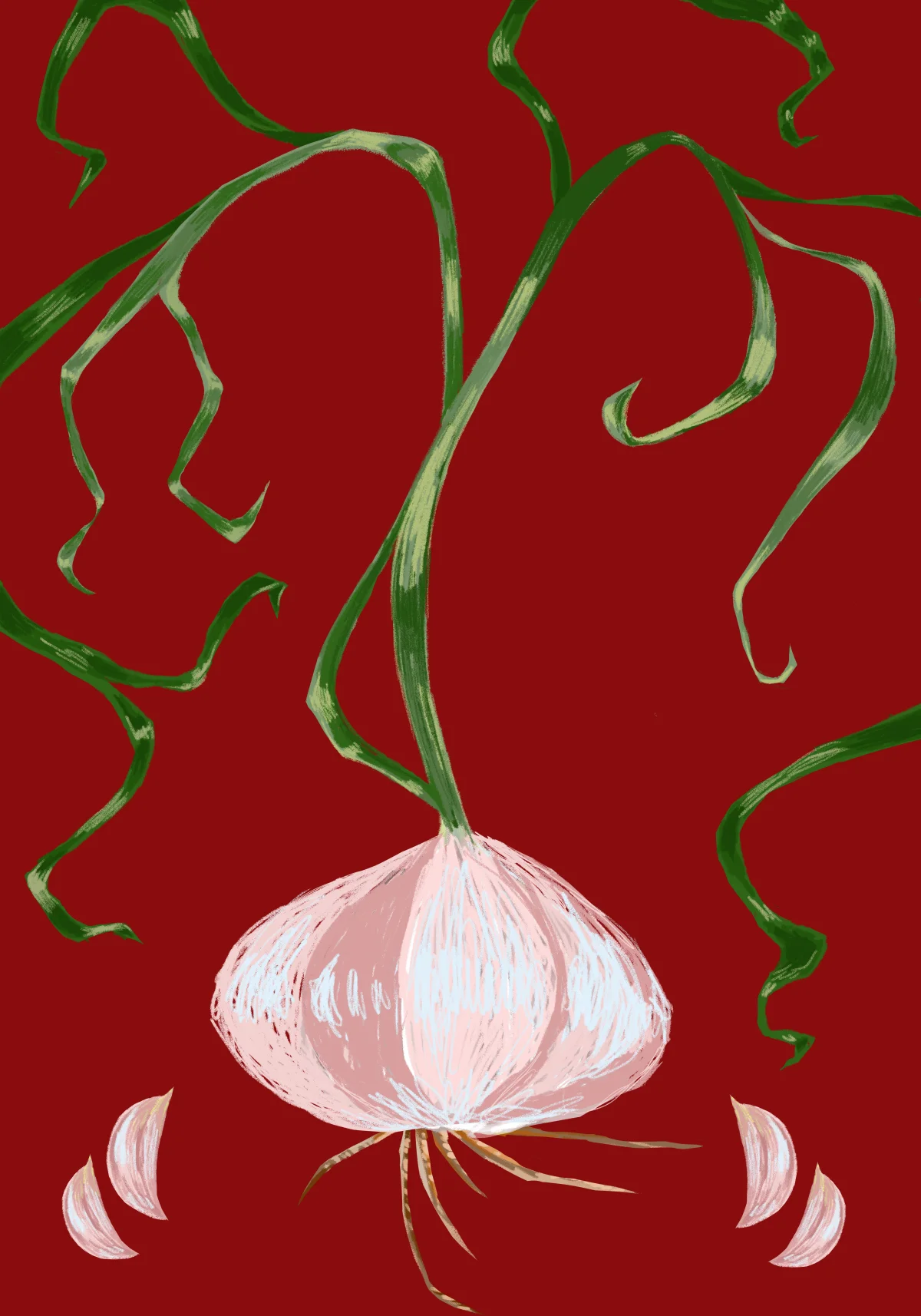
Garlic (Allium sativum) is one of the oldest cultivated plants in the world and has been known for its health-promoting properties for millennia. Already valued in Central Asia and ancient Egypt, it is still used today as a natural remedy and tonic. Its components have antibacterial and antiviral effects and can reduce the risk of cardiovascular disease.
Garlic originated in Central Asia and was already used in the Stone Age. In ancient Egypt, its use as a remedy has been documented since at least 1550 BC; even pyramid workers received it for strength. In antiquity, Pliny recommended it for numerous ailments. In the Middle Ages, garlic was considered a protective and medicinal remedy for a wide variety of illnesses, from toothaches to the plague. Scientific confirmation of its antibacterial effect was finally achieved in 1858 by Louis Pasteur. In Asian medicine and culinary arts, fermented black garlic, with its sweet plum-vanilla-licorice notes, is also highly valued. It is traditionally fermented for over 90 days in Asia, is easier on the stomach and does not produce the typical garlic smell when eaten.
Botanical Facts
 Soil that is too moist quickly leads to rot.
 Frost-hardy and winter-resistant, especially special winter garlic varieties.
 Central to Western Asia
 June - September
 full sun
 sunny, dry, nutrient-rich places
Healing Properties
Garlic has been used as both a food and a medicinal plant since ancient times. Studies show that both white and black garlic can have anti-inflammatory, immune-boosting, anti-allergic, and antibacterial effects.
Garlic has been proven to support the cardiovascular system by lowering cholesterol levels, dilating blood vessels, and thinning the blood, which can have a positive effect on blood pressure. The active ingredient allicin, which is released when garlic is crushed, inhibits bacteria, viruses, and fungi—hence garlic's reputation as a "natural antibiotic." It can also promote digestion, relieve bloating, and combat intestinal parasites. As an antioxidant, it also helps prevent cell damage and vascular changes.
Classic white garlic is the most extensively researched, while fermented black garlic is receiving increasing attention. It contains more polyphenols and has a stronger antioxidant effect, but is not considered less effective overall than white garlic.
Features
 30 - 90 cm
 With its blossoms from June to September, it serves as a food source for wild bees. Chives (Allium tuberosum) in particular are considered a valuable, bee-friendly plant for the garden. Besides its beautiful flowers, garlic, thanks to its sulfur compounds, acts as a natural barrier against pests such as aphids.
 By growing garlic in the vegetable garden or chives in the herb garden, you promote biodiversity and protect your plants naturally.
 🥕 (tuber), 🌿 (herb)
 ⚕ (medicinal plant), 🍽 (edible)
For optimal effect, garlic should ideally be eaten raw or only gently cooked – ideally regularly in everyday life.
⚕ (medicinal plant), 🍽 (edible)
For optimal effect, garlic should ideally be eaten raw or only gently cooked – ideally regularly in everyday life.
Endangerment Level
* Least Concern
All information about herbs has been carefully compiled but does not claim to be complete. None of the information provided constitutes medical advice.
GOLDEN RULE for EVERYTHING: Eat only what you know! The rule applies: a handful of wild plants per person and day may be collected on public land. Use only washed plant parts that you can identify clearly – when in doubt, please refrain from using them.
TIP: One advantage of buying over-the-counter medicines from a pharmacy or specialist retailer is the expert advice on your symptoms.