St. John's wort
Animation: Luca Ternes Sound: Luca Ternes
Plant Whisper
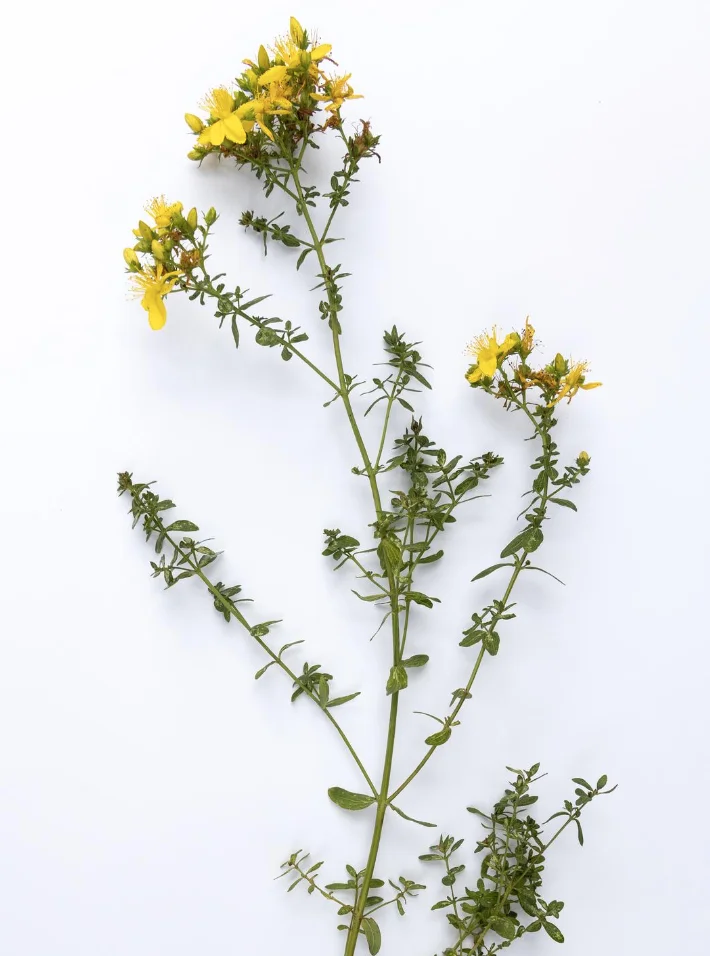
St. John's wort (Hypericum perforatum) belongs to a diverse genus of plants: Around 380 Hypericum species are known worldwide, about 20 of which are native to Central Europe – including common St. John's wort (Hypericum perforatum). Characteristic of this species is the fine, glandular dotting of its leaves, which is particularly visible when held up to the light – a feature that clearly distinguishes it from other species.
St. John's wort owes its name to its flowering time: It begins to bloom around the summer solstice, around St. John's Day (June 24).
Tea and tinctures can be made from the flowering herb, which are traditionally used for low mood, anxiety, and nervous restlessness. An infusion of the flowers is also valued for stomach, intestinal, and gallbladder problems.
So-called "oily preparations" are also possible – known as St. John's oil or red oil. This is a traditional preparation using fresh blossoms: The blossoms are lightly crushed, covered with olive oil in a 1:4 ratio, and infused in a clear glass container in a warm, sunny place for about six weeks, being shaken regularly. During this process—originally also called "fermentation"—the oil turns a characteristic dark red due to the active ingredient hypericin.
St. John's wort oil is used externally for muscle pain, strains and sprains, as well as sunburn and minor burns (first-degree burns). Intensive use of St. John's wort can increase the skin's sensitivity to light and may reduce the effectiveness of other medications.
Botanical Facts
 slightly humid
 frost-resistant
 Europe, Western Asia
 starting around St. John's Day (June 24th) and continuing into October
 sunny, warm location
 Dry to fresh and open locations
Healing Properties
St. John's wort is recognized as a herbal medicine: Standardized extracts are considered "medically established" for the treatment of mild to moderate depression. It is also traditionally used for nervous restlessness, anxiety, and temporary mental exhaustion. Externally, for example as St. John's wort oil, it is used for minor skin inflammations, small wounds, muscle pain, and first-degree burns.
Features
 15 - 100 cm
 ❀ (Flowers and buds)
⚕ (medicinal plant), ☠ (poisonous plant)
❀ (Flowers and buds)
⚕ (medicinal plant), ☠ (poisonous plant)
 Exceptionally bee-friendly. As a native wild plant, St. John's wort offers abundant pollen for over 13 species of wild bees, honeybees, and butterflies.
Endangerment Level
* Least Concern
All information about herbs has been carefully compiled but does not claim to be complete. None of the information provided constitutes medical advice.
GOLDEN RULE for EVERYTHING: Eat only what you know! The rule applies: a handful of wild plants per person and day may be collected on public land. Use only washed plant parts that you can identify clearly – when in doubt, please refrain from using them.
TIP: One advantage of buying over-the-counter medicines from a pharmacy or specialist retailer is the expert advice on your symptoms.