Ground ivy, Creeping Charlie

Plant Whisper
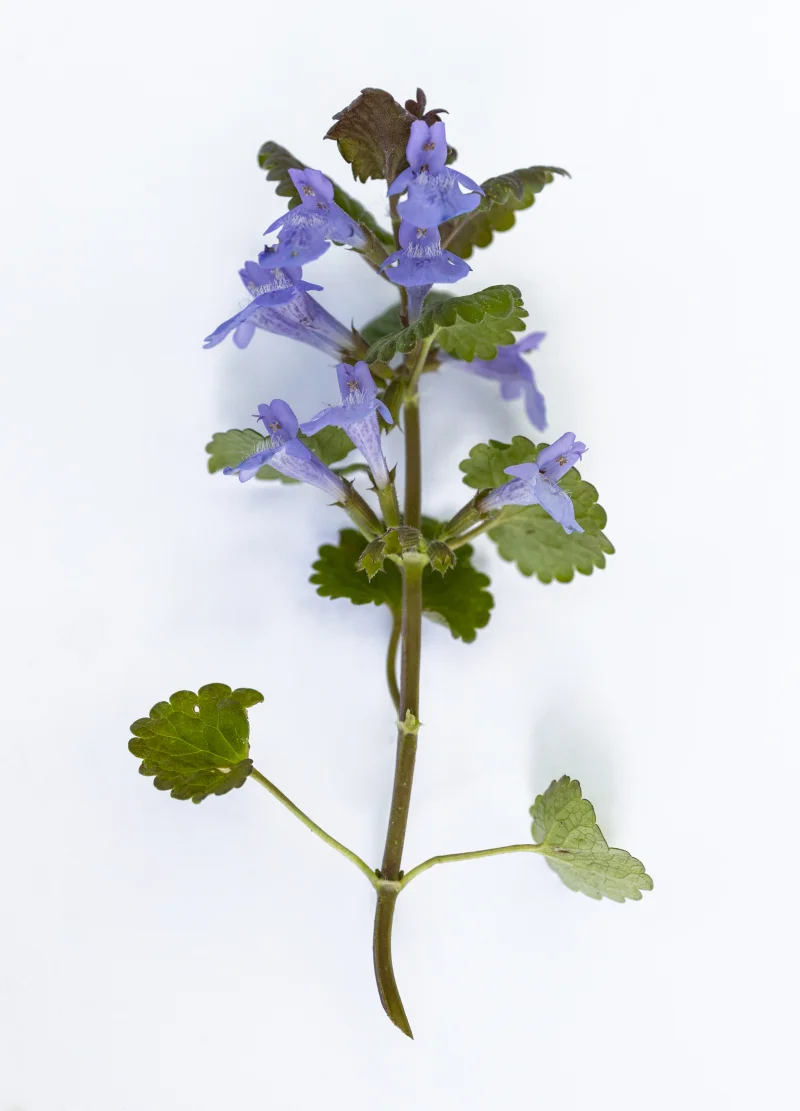
Ground ivy (Glechoma hederacea), also known as creeping charlie, was once a versatile wild herb. Long before hops became common, it played an important role in brewing beer: As so-called "beer herb," its bitter compounds ensured preservation and a spicy, bitter aroma—hence old names like "garden hops" or "earth hops." It wasn't until the German Purity Law of 1516 that this wild herb disappeared from beer.
It was also used in cheesemaking: Its components could curdle milk, thus serving as a plant-based substitute for animal rennet.
Ground ivy is a common spring flower. It has a long tradition as a flavoring ingredient. Old names like "soldier's parsley" or "soup herb" attest to this. It was an ingredient in the traditional Maundy Thursday soup, which was believed to protect against illness throughout the year. The soup likely originated in pre-Christian times. Nine spring herbs were used in this soup.
As a culinary and medicinal herb, it is still a popular ingredient in cooking due to its aromatic flavor (reminiscent of mint, sage, or parsley).
It is used in cooking for both culinary and medicinal purposes.
Botanical Facts
 moist
moist
 extremely frost-resistant down to -20 degrees
 Europe, Asia
 April to June
 prefers partial shade to shade
 fresh to damp meadows and forests
Healing Properties
Ground ivy is used in folk medicine for mild colds and coughs, as well as for gastrointestinal complaints; externally, it is used in baths for skin diseases. However, it is not recognized as a medicine. Its use is not recommended.
Features
 10 - 40 cm
 🌿 (Herb)
 An excellent, native insect plant and valuable food source, especially for bees and butterflies from March onwards.
⚕ (medicinal plant), 🍽 (edible), 🔧 (food additive)
The young shoots are best harvested at the beginning of the flowering period, from March to April. The flowers themselves have a much milder flavor and are wonderful as a decorative element, for example in salads or quark dishes.
Idea for a spring salad: A mixture of yarrow leaves, chervil leaves, watercress, daisies, nettle leaves, and ground ivy.
These are the best ingredients for harvesting the young shoots at the beginning of the flowering period, from March to April.
An excellent, native insect plant and valuable food source, especially for bees and butterflies from March onwards.
⚕ (medicinal plant), 🍽 (edible), 🔧 (food additive)
The young shoots are best harvested at the beginning of the flowering period, from March to April. The flowers themselves have a much milder flavor and are wonderful as a decorative element, for example in salads or quark dishes.
Idea for a spring salad: A mixture of yarrow leaves, chervil leaves, watercress, daisies, nettle leaves, and ground ivy.
These are the best ingredients for harvesting the young shoots at the beginning of the flowering period, from March to April.
Endangerment Level
* Least Concern
All information about herbs has been carefully compiled but does not claim to be complete. None of the information provided constitutes medical advice.
GOLDEN RULE for EVERYTHING: Eat only what you know! The rule applies: a handful of wild plants per person and day may be collected on public land. Use only washed plant parts that you can identify clearly – when in doubt, please refrain from using them.
TIP: One advantage of buying over-the-counter medicines from a pharmacy or specialist retailer is the expert advice on your symptoms.