daisy
Animation: Hannah Nolte Sound: Anastasia Stephan
Plant Whisper
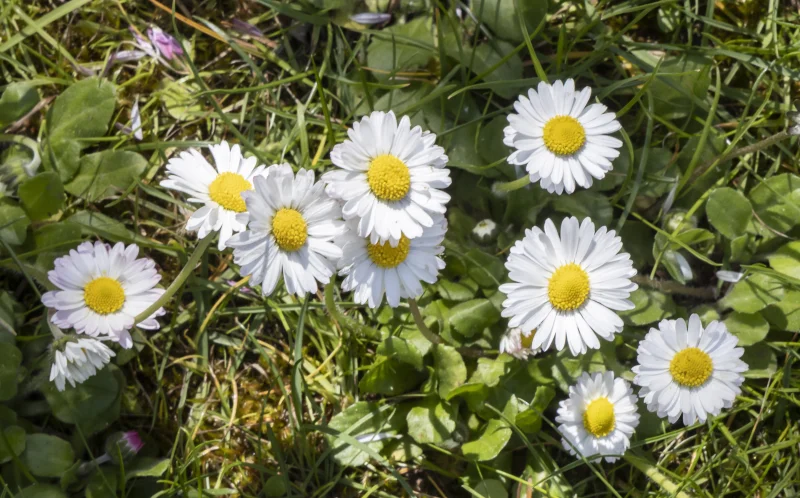
Daisy – Bellis perennis belongs to the daisy family. The Latin name derives from bellus = "beautiful" and perennis = "perennial," referring to the pretty, perennial plant.
I am the daisy, and I bring you lightness and gentle strength… a small but versatile plant that has always been valued in folk medicine.
Freshly picked, I bring not only color but also a delicate, slightly fruity note to your kitchen. Whether in salads, on bread, in desserts, or as decorative ice cubes – I make your food vibrant and special.
You can make a delicious jelly from daisies. They are also a great ingredient for salads, vegetable dishes, and herb rolls. The still-closed or only partially opened flower heads are a special addition to cakes or desserts. And as with all medicinal plants: listen to your body and take breaks if using them for an extended period so that my effects are preserved.
Botanical Facts
 moderately humid
 Hardy, tolerates frost down to approximately -15 to -17 degrees Celsius
 Europe
 March to June
 light-loving
 frequently mowed meadows and roadsides
Healing Properties
The daisy is traditionally used to treat colds and has anti-inflammatory properties; historically, it has a wide range of applications. It contains, among other things, saponins, bitter substances, flavonoids, and tannins, which can gently support the body and contribute to internal cleansing. As a tea, it is frequently used for coughs and fever, but also for gout and rheumatic complaints. It is also said to stimulate metabolism, aid detoxification, and alleviate spring fatigue. Overall, the daisy stimulates the appetite, promotes digestion, loosens mucus, and has mild antispasmodic and analgesic effects.
Features
 5 - 15 cm
 ❀ (flowers), 🌿 (herb)
🍽 (edible), 💐 (ornamental plant), (⚕?) (historical, without proven effect)
❀ (flowers), 🌿 (herb)
🍽 (edible), 💐 (ornamental plant), (⚕?) (historical, without proven effect)
 Daisies are natural weather prophets: Open blossoms in the morning signal sunny, dry weather. If the blossoms close or remain closed, this announces damp weather or rain.
 Food source for insects: Especially in spring, when many other plants are not yet in bloom, daisies are an important food source for bees, bumblebees, and other pollinating insects. Their open flowers make the nectar and pollen easily accessible.
Endangerment Level
* Least Concern
All information about herbs has been carefully compiled but does not claim to be complete. None of the information provided constitutes medical advice.
GOLDEN RULE for EVERYTHING: Eat only what you know! The rule applies: a handful of wild plants per person and day may be collected on public land. Use only washed plant parts that you can identify clearly – when in doubt, please refrain from using them.
TIP: One advantage of buying over-the-counter medicines from a pharmacy or specialist retailer is the expert advice on your symptoms.