Oregano
Animation: Aleksandra Nikolic Sound: Beyza-Gül Yüksel
Plant Whisper
I am also known as oregano or wild marjoram (Origanum vulgare). In the warmth of summer, my spicy fragrance unfolds, a result of the delicate interplay of my essential oils. Even a light crush of my leaves brings my aroma to life.
For centuries, my versatile properties have been valued. In the past, I was used to treat various ailments and was also considered a protective herb, to which special, preserving powers were even attributed. Whole bunches of the herb were hung in stables to protect livestock from witchcraft. Brides would place sprigs of oregano in their shoes or tie them into their bridal bouquets.
I remain a staple in the kitchen to this day: I enhance pizza, pasta, vegetable, and cheese dishes, lending them a warm, aromatic touch. I am also associated with well-being and good cheer—hence names like "good cheer" or "bringer of joy."
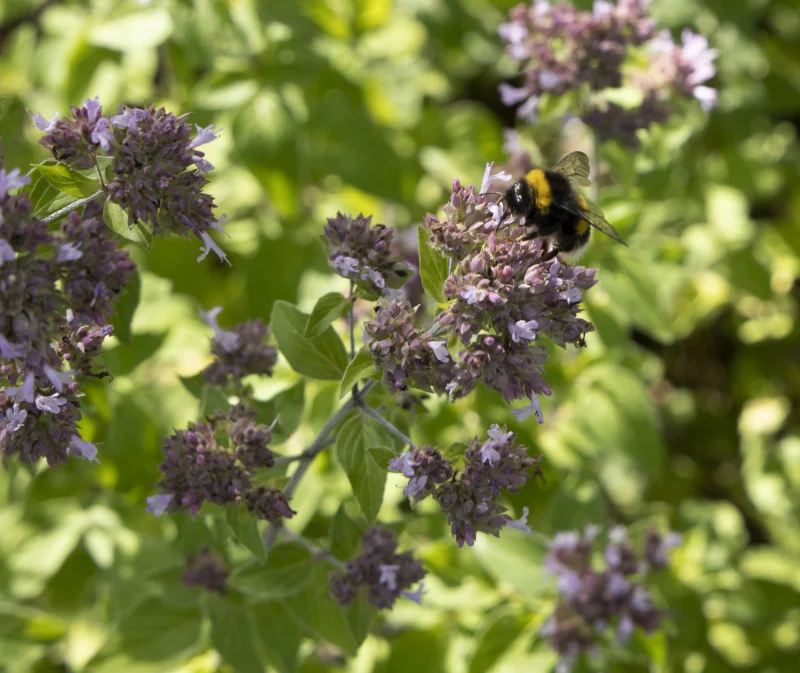
I grow in sunny, dry places, decorate the landscape with my pink blossoms, and am a valuable food source for many insects.
Botanical Facts
 Dry to moderately dry, well-drained and nutrient-poor soils
 hardy
hardy
 Europe, Asia
 July and often until October
 high light requirement
 dry locations in meadows, forests and field margins
Healing Properties
As a medicinal plant, oregano stimulates the appetite and can be used for digestive problems. When brewed as a tea with a little honey, it acts as an expectorant for coughs.
NOTE: Oregano has not yet been classified as a traditional medicinal product under Section 39a of the German Medicines Act (AMG).
Features
 20 - 70 cm
 ❀ (flowers), 🌿 (herb)
 It offers nectar that can contain up to 76% sugar. A layer of hairs provides protection. The blossoms are particularly popular with honeybees. Numerous butterfly species, such as the Large Heath, the Marbled White, and the Small Heath, as well as hoverflies, also visit the flowers. Peak flowering occurs around 1 p.m. Pollination takes place via the insects' backs.
⚕ (medicinal plant), 🍽 (spice)
It offers nectar that can contain up to 76% sugar. A layer of hairs provides protection. The blossoms are particularly popular with honeybees. Numerous butterfly species, such as the Large Heath, the Marbled White, and the Small Heath, as well as hoverflies, also visit the flowers. Peak flowering occurs around 1 p.m. Pollination takes place via the insects' backs.
⚕ (medicinal plant), 🍽 (spice)
 It is primarily used in Mediterranean cuisine and only rarely added as a medicinal herb.
Endangerment Level
* Least Concern
All information about herbs has been carefully compiled but does not claim to be complete. None of the information provided constitutes medical advice.
GOLDEN RULE for EVERYTHING: Eat only what you know! The rule applies: a handful of wild plants per person and day may be collected on public land. Use only washed plant parts that you can identify clearly – when in doubt, please refrain from using them.
TIP: One advantage of buying over-the-counter medicines from a pharmacy or specialist retailer is the expert advice on your symptoms.