Betony
Animation: Antonia Reuter Sound: Antonia Reuter
Plant Whisper
The common betony (Betony) was used as a valuable medicinal plant as early as the Middle Ages. It is already listed in Charlemagne's plant register of 812 (Capitulare de villis) and was thus a staple in monastery and apothecary gardens.
Betony, also known as woundwort, is a medicinal plant used for 1800 years and was valued as an important protective herb in the Middle Ages. It also played a significant role in folklore: In antiquity, Roman gladiators wore it as a protective amulet against injuries, and it was considered particularly valuable. It was often planted near churches, or dried plant parts were worn as amulets, often attached with red wool, to protect against negative influences. In Anglo-Saxon tradition, betony—similar to vervain—was also considered a particularly effective protective herb.
According to Hildegard von Bingen, those plagued by false dreams can be helped by carrying betony with them when they go to sleep at night and while they sleep, and they will experience fewer false dreams.
...
Botanical Facts
 Alternatingly wet to wet
 robust, winter-hardy
 Europe, Western Asia
 June - September
 sunny to partially shaded
 fresh to moist nutrient-poor meadows
Healing Properties
Despite its diverse effects, woundwort (Stachys officinalis) is rarely used in herbal medicine and is therefore relatively unknown.
Its effects are due, among other things, to bitter substances and tannins, which also stimulate metabolism.
Furthermore, it has a strengthening and hemostatic effect and can provide relief from gastrointestinal issues such as diarrhea. It is also valued in tea blends for treating colds due to its expectorant properties.
Features
 ❀ (flowers), 🌿 (herb)
⚕ (Medicinal plant), 🔧 (Aroma plant, Dye plant)
❀ (flowers), 🌿 (herb)
⚕ (Medicinal plant), 🔧 (Aroma plant, Dye plant)
 The purplish-violet flowers are an excellent source of nectar and pollen for a variety of insects. Specialists: Wild bees, especially the rare late-flowering woundwort bee, benefit greatly from the plant. Caterpillar food: The plant serves as caterpillar food for various butterfly species.
The woundwort is an ideal plant to promote biodiversity in the garden, especially by planting it in perennial beds or as part of a flower meadow.
The purplish-violet flowers are an excellent source of nectar and pollen for a variety of insects. Specialists: Wild bees, especially the rare late-flowering woundwort bee, benefit greatly from the plant. Caterpillar food: The plant serves as caterpillar food for various butterfly species.
The woundwort is an ideal plant to promote biodiversity in the garden, especially by planting it in perennial beds or as part of a flower meadow.
Endangerment Level
–
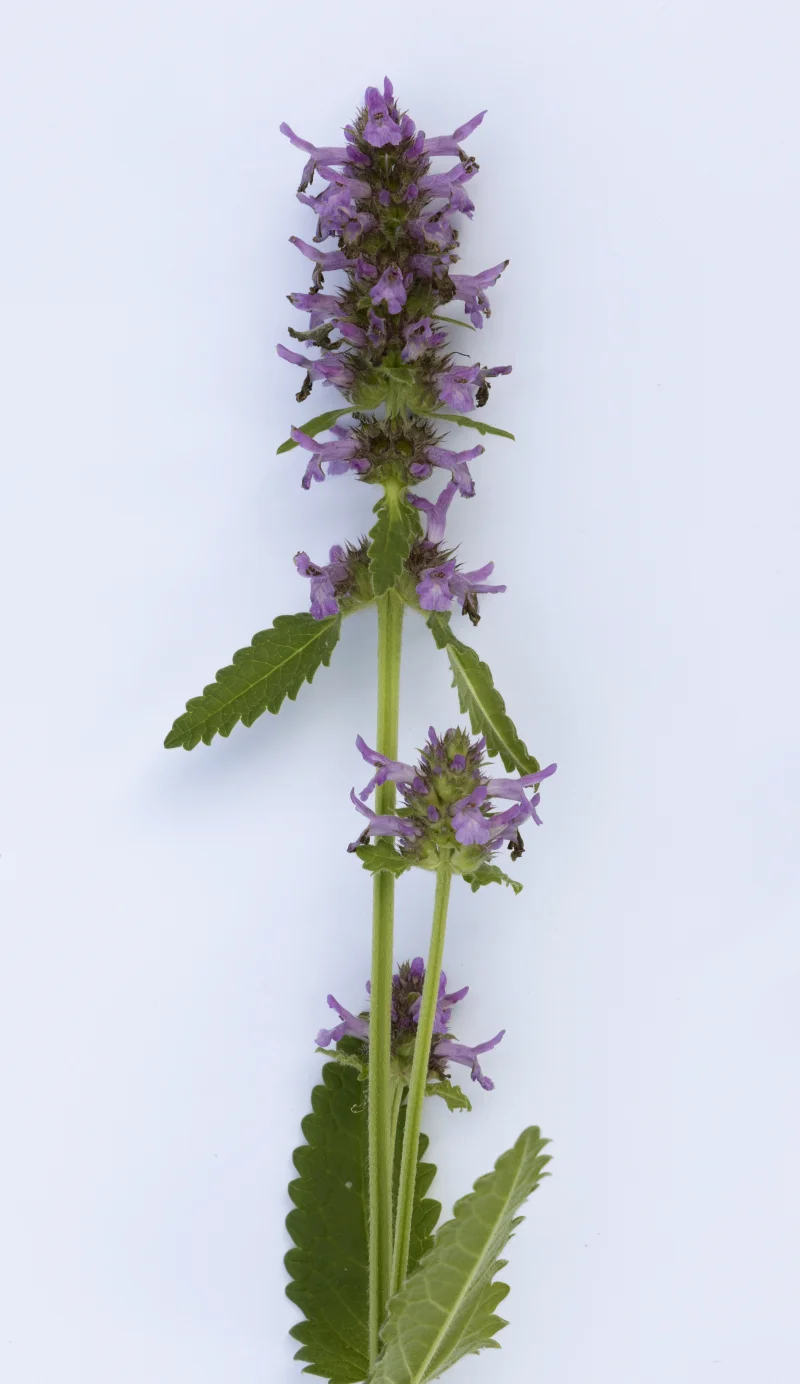
All information about herbs has been carefully compiled but does not claim to be complete. None of the information provided constitutes medical advice.
GOLDEN RULE for EVERYTHING: Eat only what you know! The rule applies: a handful of wild plants per person and day may be collected on public land. Use only washed plant parts that you can identify clearly – when in doubt, please refrain from using them.
TIP: One advantage of buying over-the-counter medicines from a pharmacy or specialist retailer is the expert advice on your symptoms.